


Landing Page Mistakes: E-commerce sites treating new and returning visitors the same

The landing page is the hub of most modern marketing departments. Think about it. Even beyond digital marketing – from print ads, to TV ads, to a QR code on a table tent in a restaurant – almost every aspect of your marketing campaigns drive potential customers to a landing page.
That is why landing page optimization can deliver such an impressive ROI. So I talked to my colleagues in the MECLABS Conversion Group to help identify the most common landing page mistakes they see every day.
These marketing optimization researchers help improve performance on landing pages, from Fortune 500 B2B companies to small e-commerce sites, every day. They’re the kind of folks that produce a triple-digit lift in the morning, and then shoot me with a Nerf gatling gun after lunch.
Here on the MarketingExperiments blog, we’ll explore the most common landing page mistakes they see encounter in their research, to help you increase conversion and improve your marketing performance.
E-commerce sites treating new and returning visitors the same
“This mistake is specifically targeted toward ‘landing pages,’ such as category/product pages,” according to Associate Director of Optimization, Adam Lapp. “A landing page isn’t always the neat, one-page, no navigation, clear headline type pages we typically think of. A landing page is simply the first page visitors arrive at.”
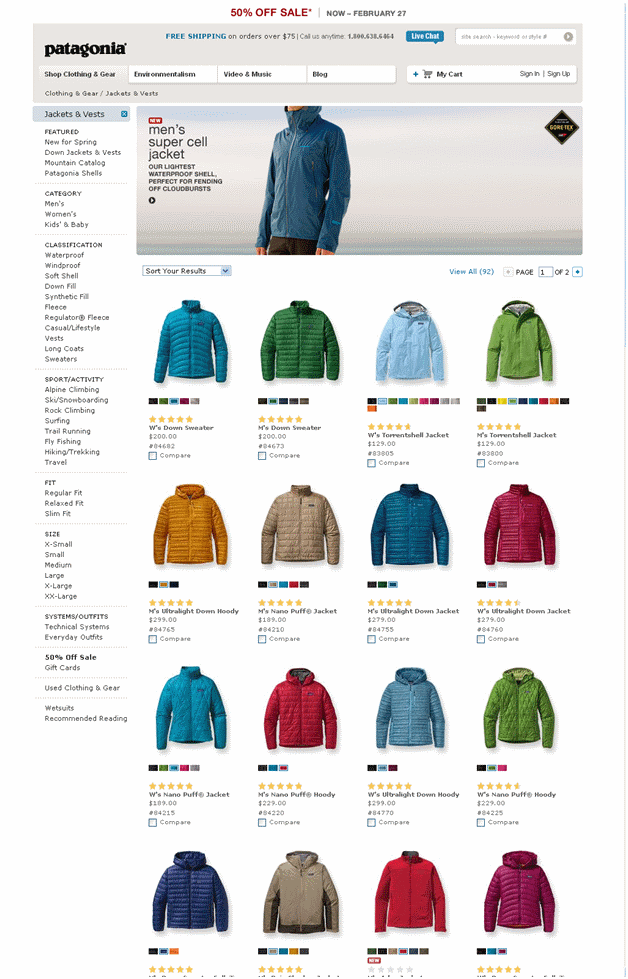
Let’s look at an example and see what Adam would think of it. I’ll go onto Google and search for “Patagonia jacket” to see how both a brand and a reseller e-commerce site (one with good SEO, might I add, since I’m just clicking on the top links I get) handle new customers …
Brand e-commerce site
On the upside, the landing page is a “jackets and vests” category page, so I know I’m in the right place.
On the downside, I am a new customer (which they should be able to identify by a cookie), but I don’t know why I should buy from Patagonia? Where is the primary value proposition?
An argument could be made that Patagonia was in my search keyword, so I’m already highly motivated to buy from them. However, what if I had another tab open in which I searched for “Columbia jacket”?
How does Adam advise sites to present value to new customers? “You can use just 50-100 pixels at the top of the page to tell customers why they should shop here, e.g., free shipping, match prices, best selection,” Adam said. “This may even have a ‘+’ or ‘-’ to collapse or roll up the dynamic content. Or use a side column.”
Patagonia does indicate, in mice type that I overlooked the first three times I looked at the page, that they do, in fact, have free shipping should I be interested in a Nano Puff Hoody for our cold Jacksonville winters.
However, they do not answer the key primary value proposition question: If I am your ideal customer, why should I buy from you rather than your competitors?
Reseller e-commerce site
Now let’s take a look at how a vendor site handles the same search term …
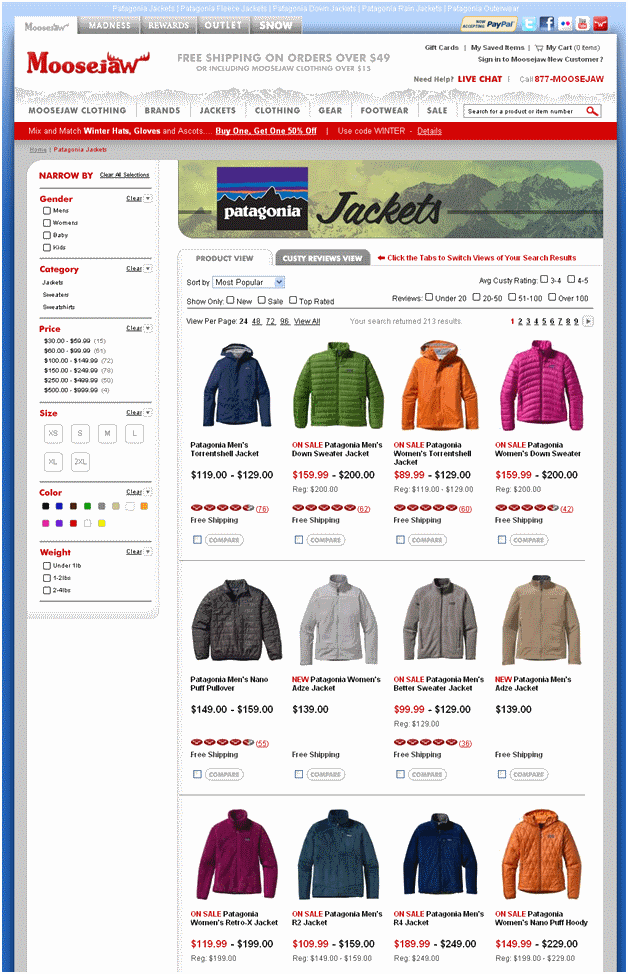
Kudos to Moosejaw for making it abundantly clear that I am in fact in the right place, on a jackets category page. As a third-party site, it’s also important to make sure that I’m not on just any jackets category page, so they’ve already filtered to show only Patagonia jackets and make that very clear in their header as well.
And while Moosejaw does not answer the primary value proposition anywhere that I can see for this new customer, they are clearer about offering free shipping – both with a larger headline in the header and a free shipping line under each jacket.
How should e-commerce sites handle returning customers?
Now that we’ve given you a few ideas for handling new customers, what should change for returning customers? This is key. After all, if you’ve ever read any marketing blog post before, you know that customer acquisition is quite expensive, so you want to put a special focus on your new customers.
“If I am a returning customer, I don’t need the ‘primary value prop,’ but instead more ‘prospect-level value prop,’” Adam said.
In other words, you don’t have to give them the value proposition for your entire company. But if they’ve already bought (and you have some cookied information about them), you can let them know why a specific prospect like them would want to buy again from your store.
For example, both hikers and Seattle moms might want to buy Patagonia jackets.
If you know they’ve already bought hiking boots, climbing gear and a tent, you could present your hiker-specific value prop.
If they’ve previously bought (or at least viewed) kids clothes and a jogging stroller, you could assume that they’re a mom simply trying to stay dry in the Pacific Northwest, and present a relevant value proposition for that prospect.
Beyond the value prop, here are a few other things that Adam suggests you present to your returning customers:
- Previously viewed items
- Notification that there’s an item in their cart
- A special coupon code for returning customers
- A page with a section at the top that says “New Jackets Since Your Last Visit” (or if you don’t want to go Big Brother, “New Jackets in the Last X Months” using information from the cookie about how long it’s been since their last visit)
Related Resources:
E-commerce: When should you reveal the price in your shopping carts?
E-commerce Testing: Redesigned order page, shortened shopping cart drive 13.9% lift in conversion
E-commerce: How your peers optimize shopping carts and product pages
Hi Dan. Great post! I actually saw another search result that welcomed the visitor and provided value to new visitors immediately upon arrival.
http://www.altrec.com/patagonia/jackets
Upon a second visit, you do not receive the same messaging. Altrec must assume that since you are a returning visitor, that you know that they offer a 100% guarantee and free shipping.
It’s not an abundance of unique value, but it is a good example of treating new and returning visitors differently in the e-commerce space.
Some very valuable points here.
Thanks Daniel.
I just chanced upon this article. Have been helping build our young online toy store. I really liked the idea of a message for new and returning customers. However, while building our site, we had to abandon the option as Magento (our platform) has an inbuilt cookie life of 1 day. By any chance have you come across a way to circumvent that inbuilt constraint.
ps: thanks to Adam Lapp for the helpful link to altrec’s site. Really helpful
Hi Dan,
This is a very useful article with some great pointers, many thanks!
Now a day e-commerce is growing rapidly. Every store has an online web presence to sell their products online. Thank you for this useful article, i shall implement in my shopping cart.