Archive

Posts Tagged ‘LPO’

Website Optimization: How your peers increase their conversion rate…quickly

January 9th, 2012 6 comments

This time of year, many marketers are beginning to execute on their new marketing plans. However, sometimes you have to deviate from the plan and just need a sale or lead generation lift… RIGHT NOW!

When your boss or client challenges you to gain a quick conversion increase on your landing pages, what tools do you turn to in your marketing toolbox?

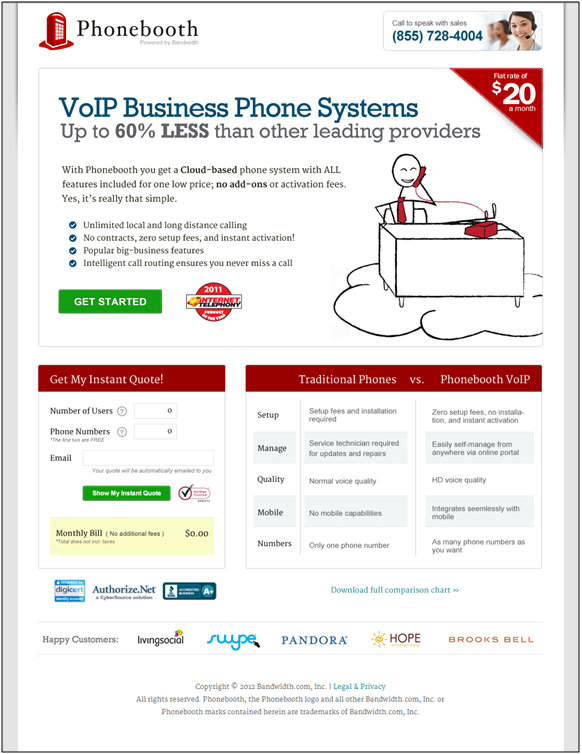
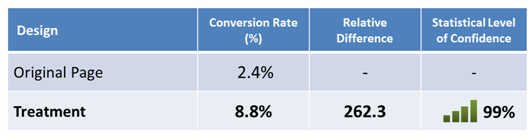
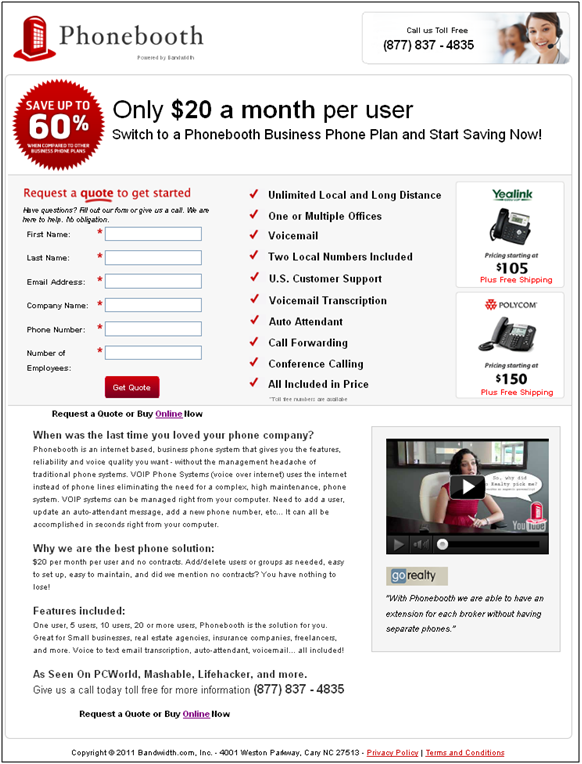
In Wednesday’s Web clinic – Rapidly Maximizing Conversion: How one company quickly achieved a 53.9% lift with a radical redesign – MECLABS Managing Director Flint McGlaughlin will share our top discoveries around how to quickly improve your conversion rate.

But before we share what we learned, we wanted to hear from you. Here are a few of our favorite “quick hit” tips from your peers …

-

Headline optimization

I have found that headline and subhead optimization works well for the B2B SaaS clients I typically work with. Even after I think I have tested my way to the perfect headline, I run more tests and get more lift. I regularly get 10% lifts from this tactic. If I have more time to gather data, I will multivariate test headline, CTA button and benefit/bulleted text.

Finally, if you haven’t already, make sure there is just one key CTA button which is huge and obvious. I’m always surprised at how many sites don’t do this.

– Chris Neumann, General Manager, TextMarks

-

5 Quick Tips

A few quick things come to mind:

1) Drop prices and provide free shipping: This one is pretty obvious, but nothing converts like low prices and free shipping.

2) Add security/trust logos and other “credibility” links (security policy, etc.) to checkout process: These types of additions have proven to immediately bump the conversion rate by providing a visual feel of safety and security, even if the users never do anything besides see the presence of the icons or links.

3) Simplify checkout process, including NOT requiring users to create an account in order to checkout: A simple checkout process reduces the likelihood users will drop-off.

4) Increase frequency of targeted email campaigns: There is so much email going around these days, from so many different sources, for so many different purposes. Research and testing has shown that sending a single email campaign up to 9 times can continue to provide incremental benefit in sales, with very little subsequent downside in customer satisfaction. The truth is, most people don’t see a very high percentage of their email.

5) Implement abandoned cart targeted emails: Enticing users to complete the checkout process can be very effective because you are targeting shoppers that you know are already interested in some of your products.

The above items are all proven to increase conversion – some are more quickly implemented than others.

– Todd Stalter, Senior Visualization Analyst, OneSpring

-

Contests and chatting

For quick results I would implement the following:

1. An online contest where all the visitor needs to do is provide a name and email address, Facebook “like,” and/or Twitter follow, depending on what kind of lead capture you want. Online contests with enticing prizes can go viral and get you many followers quickly.

2. Implement a live chat feature on the site to make it easier to interact with visitors. However, I have found that live chat software with the standard popup window do not convert as well as the newer live chat programs such as Zopim and Olark that have a more social feel to them. Another option is to implement a video live chat program so customers can see the site representative on video, which helps even more with building trust in your company.

– Shai Atanelov, CEO & Founder, BigtimeWireless.com

-

Related Resources:

Rapidly Maximizing Conversion: How one company quickly achieved a 53.9% lift with a radical redesign – Web clinic

Most-Tweeted Posts of 2011: Social media marketing, copywriting, email testing and more …

Landing Page Optimization: How to plan a radical redesign so you get a lift AND a learning

Marketing Campaign: Landing page optimization can help improve the return on your media spend


Landing Page Optimization: How to plan a radical redesign so you get a lift AND a learning

December 16th, 2011 No comments

If you’re into online testing, you’ve probably experienced this problem:

  1. You changed more than one element on a page (or an ad)
  2. You ran the test
  3. You recorded a significant gain (or loss)
  4. Your boss asked you to replicate it somewhere else

What do you do now? What made the difference here that will make a difference somewhere else?

Any time you start changing more than one element in an ad, page or process, you start making interpretation and reapplication more and more difficult.

However, there is a way to interpret your radical redesign so that you can make it work somewhere else.

And, we’re going to show you how in this blog post. Plus, we’ll talk more about radical redesigns in our next Web clinic on Jan. 11 – Rapidly Maximizing Conversion: How one company quickly achieved a 53.9% lift with a radical redesign.


The answer is found in elementary math

Let’s take a trip back to the third grade to help us solve today’s problem.

Remember fractions? I remember the days when a teacher would ask me to add two fractions together by hand. What was rule number one?


If I wanted to do the addition, I would have to have a common denominator. The bottom number must be the same on both.


So what in the world does this have to do with marketing?

Read more…

Marketing Campaign: Landing page optimization can help improve the return on your media spend

December 12th, 2011 1 comment

Let’s take a quick look at the typical marketing funnel in 2011 to see how you can improve your results. If you’re like the average marketer, you spend a lot of money on media, such as:

-          Broadcast TV ads

-          Newspaper ads

-          Magazine ads

-          Outdoor advertising, such as billboards and transit advertising

-          Radio ads

-          Internet advertising, such as banner ads and pay-per-click ads

In fact, marketers spent $238 billion in just the first six months of 2010, according to Nielsen.


Why do companies spend so much on advertising?

That’s a lot of loot. And, of course, marketers are spending that money to sell a product. However, they aren’t truly selling a product or service at all … they’re actually spending that money to drive customers to a landing page. In fact, according to Econsultancy, 65% of all UK print and television advertising now includes a Web address.

Even when the ad don’t specifically include a URL, ad-inspired branded searches drive many customers to a website as the next logical point of contact.


In other words, you’re spending a lot of dough to funnel traffic to your landing pages.

If you’re a long-time reader of the MarketingExperiments blog, you already know about the power of LPO and you might as well stop reading now because I’m not going to share anything new today (although, feel free to forward this post to your boss, colleagues, and mother to show the value of what you do every day).

However, if you are looking to improve the performance of your marketing campaign and are not yet familiar with landing page optimization, I hope you’re starting to see why this practice can have such an impressive ROI.

Essentially, if you’re spending all of this money to drive potential customers to a website, investing just a little in increasing conversion on that site (more sales, more leads, etc.) can have an outsize impact, as you can see in this research from the MarketingSherpa 2011 Landing Page Optimization Benchmark Report:


Click to enlarge


After all, the deeper into the funnel you improve performance, the bigger an impact it has.

  Read more…

Social Media Marketing: Should Facebook host your landing page?

November 2nd, 2011 13 comments

It’s the latest trend in print ads and TV commercials – drive customers to a landing page on Facebook instead of the brand’s own website or microsite. So, for example, a Toyota print ad with a contest might include Facebook.com/Toyota as the call-to-action this year when last year it was likely Toyota.com/contest.

So I can see the benefit to Mark Zuckerberg for you paying good money to drive all of your traffic to his site, but is a Facebook landing page the right call-to-action for your campaigns?

As with many marketing questions, there is no one correct answer, no one-size-fits-all solution. However, if you are thinking of using a Facebook landing page in your marketing, here are some factors to consider. Read more…

Landing Page Optimization: Addressing customer anxiety

October 7th, 2011 5 comments

The first week of a new job can fill a person with anxiety. I should know, as I recently finished my first week as MECLABS’s new Junior Copy Editor. Lucky for me, any concern was answered by just a quick question or click of the mouse. The proximity (a click or call away), specificity (resources like previous articles and a company Style Guide) and intensity (“reply all” gets answers from multiple people) of each answer eased my anxiety. Optimizing your landing page can do exactly the same for your website visitors.

One of the many things I did during my first week was complete the MECLABS Landing Page Optimization Online Certification Course. While I enjoyed all of the sessions, the section on anxiety most stood out.

Like many of you, I have left websites on which I didn’t feel safe entering my information. Sometimes, I could easily pinpoint my anxiety. But other times, even as a visitor, I didn’t know what specific factors left me with such concern. This session of the course helped quell my doubts, from both the customer and marketer points-of-view. Read more…

Landing Page Optimization: Crowdsource my baby

May 9th, 2011 8 comments

In the wake of Director of Editorial Content, Daniel Burstein’s vicious editorial attack on Seth Godin, I thought I would lift up Seth’s spirits by imitation (the highest form of flattery) of his crowdsourced book idea. As I wrapped up the final draft of the 2011 Landing Page Optimization Benchmark Report (BMR), I realized that some of the key insights required a categorization of strategies and tactics based out of a broad spectrum of practices.

Problem: What to name these categories?

Allow me to illustrate. The most tweetable (already tweeted once – thanks, Dan!) phrase in the BMR is perhaps: LPO is Web design with an agenda. And that agenda is to achieve a specific objective in terms of the quantity and quality of the visitor response.

An LPO objective must be defined first in terms of the target business outcome: generating a lead, closing a sale, maximizing subscription length, etc. A significant portion of the BMR is dedicated to helping marketers discover ways of getting the visitor to act, which is vastly complex. But defining the objective should be easy. You just have to do it explicitly; otherwise you may end up simply pushing things around on a page without any useful results.

So I asked a few thousand marketers: Which of the following processes/transactions is the primary objective of your organization’s website?

  1. Purchase of products or services directly on the site
  2. Request for a quotation, proposal, or sales call
  3. Free downloads, webinars, newsletters, or other content requiring form submission (lead gen)
  4. Phone call or visit to physical location (takes the process offline)
  5. Maximum ad impressions, interaction, or user-generated content
  6. Providing company or product information

There are certainly other types of objectives that may not neatly fit these categories, and this research does suggest a useful follow-up study. (I was also deliberately devious with the last answer choice. It’s an “objective” that I hear far too often, but it’s probably not your website objective. You are not in the business of providing information, unless you are the Visitors’ Bureau. And even then, your objective is not to provide information. It’s to increase the number of searches, clicks to destination websites, etc. You should be choosing (5). I make a big deal about objectives in the BMR, but I digress…) Read more…

Categories: General Tags: , , ,