



What makes a message go viral? More importantly, how can you position your marketing messages to go viral?
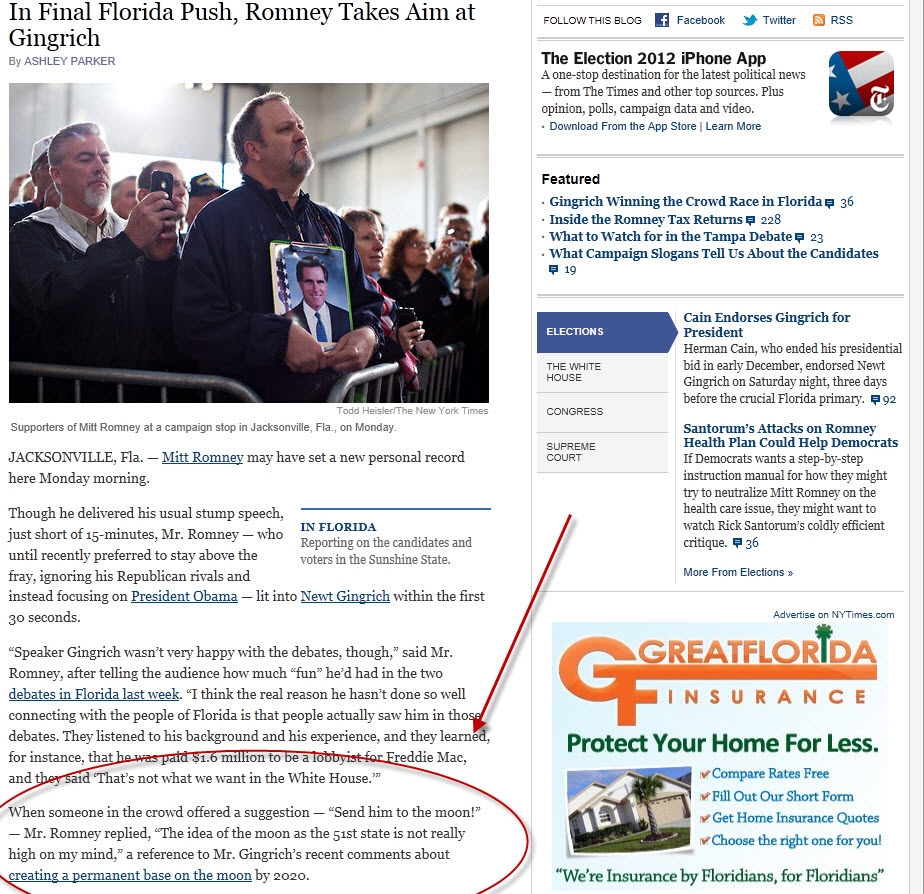
Here at MECLABS, we recently had a front-row seat to just how easy it can be for a message to go viral. Senior Marketing Manager Justin Bridegan attended a rally at one of Mitt Romney’s events here in Jacksonville. During a break in Mitt’s stump speech, in which the former governor was attacking Newt, Justin yelled out, “Send him to the moon.”
With that comment, Justin changed the course of history. Or at least had a big impact on the latest message to go viral in the 24-hour news cycle.
Mitt started on to his next point, but then spun on his heels and asked, “What did you say?”
Justin, ever the marketer, sold the line even better the second time, “Send him to the moon.”
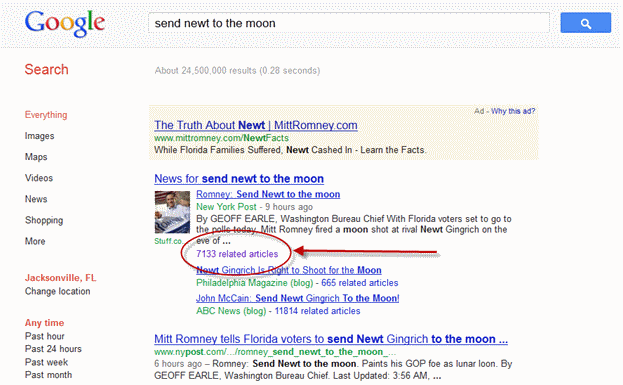
With that, Mitt changed the course of his speech to talk about Newt’s moon colonies, and within just a few hours, this interaction appeared on sites from New York Post, Los Angeles Times, and 7,131 other related articles.
“I never thought what I said would be repeated or shape some of the political discussion or landscape for the day,” Justin said. “Only after posting my video did I realize my comment had been used across the country in many of the major news affiliates.”
“It really comes down to being at the right place, at the right time, and then seizing the moment. Today I witnessed firsthand what real-time marketing means.”
Of course, we were eating it up here in the office every time the quote was picked up in another major news source. (One of our favorites was a comment on a New York Times article claiming Justin was a plant for the Romney campaign.)
How can you position your marketing messages for virality?
Just like that, with a quick spur-of-the-moment shout, Justin’s message went viral. And that’s just how easy it is.
Deceptively easy. Because, unlike, say, crafting a message in paid media, you have little control over how to get that exposure to your message.
So, I’m not going to tell you how to make your messages go viral. I simply haven’t seen anyone that can force virality. However, here are a few tips to help you at least prepare for that possibility. To remix Seneca … virality is what happens when preparation meets opportunity.
Get involved in the conversation
If there is anything we can learn from Justin’s experience, it’s that it never would have happened if he weren’t at the rally.
So what does that mean to marketers? As Woody Allen said, “Eighty percent of success is showing up.” You should be present and engaged anywhere your audience and customers are engaged in a conversation. For some, that is Twitter, Facebook and LinkedIn. For others, that may be online forums. For a local business, it may mean joining local civic organizations.
Being an upstanding member of these offline and online communities, and being a legitimate part of the conversation, increases the likelihood that the early adopters and influencers will start to spread your message.
But, don’t be a faker and try to force it. Or it could blow up in your face.
Understand the zeitgeist of your audience
That’s a fancy word for saying the “defining spirit or mood.” Being present in the community will help you keep a finger on this pulse. Genuinely serving your audience and responding to their needs don’t hurt either.
And, if you’re really engaged, it will pay off in myriad ways in your marketing. In this case, understanding the hot-button issues to push when creating a message you’re trying to spread virally.
Don’t be salesy
It sure is exciting that your winter whites are on sale for 20% off … but highly unlikely that it is a message that will go viral.
In testing conducted for “Can viral video clips drive targeted traffic to your web site?,” we found that although the 28 video clips we experimented with had no promotional message or content, 1.49% of viewers went on to become newsletter subscribers. In just 60 days, our videos were viewed more than 324,000 times at no cost to us.
The research goes on to recommend, “Be cautious about including commercial or promotional content. The most powerful short videos are those that are purely entertaining. It’s when people click through to your site that the time is right to add your sales message.”
Don’t overlook direct media outreach to help germinate your message
While there is nothing I detest more than the traditional spam press release that jams up my inbox, don’t forget that including digital and mainstream media in your viral campaign can be a helpful tipping point to virality (and, of course, the inverse is true as well – a viral idea can help lead to earned media mentions).
For example, Sunflower Market, an organic foods retail brand, sent branded flower pots to key media contacts six weeks before a store opening (the amount of time it takes a sunflower to germinate, natch) to support a downloadable desktop plant application they were trying to spread virally to promote a store opening.
As a result, they received 1,631,862 media impressions in the Indianapolis area, and beat the opening week store sales forecast by 24%.
Related Resources:
Romney urges sending Gingrich to the moon (good video here of how it all went down … starts about 1 minute into the video)
What do great viral videos have in common?
Social Media Marketing: Viral sweepstakes targeting moms grows Facebook audience 4,488%
good pointers. it’s almost like an art form of not being “salesy” but selling the message.
I agree with James, and would add it’s about being authentic.
Hi Daniel, I know this is not the right place to ask you this, but… I’d really like to interview you about landing pages for Italian market. Can I send you an email with some questions? Let me know.
Best wishes
Please do… editor AT MarketingExperiments DOT com
Thank you so-oh much Daniel, I’m really glad. Soon you’ll receive my e-mail. Have a good day.
If done successfully social media can change the dynamics of one business. With the power of the internet and social media sites such as youtube, a companies marketing campaign, which does not have to be expensive but must be effective can attract wide spread attention.
Social media is a powerful tool that must be used correctly
i liked the article, good points!
If you are intressted in that topic, I also do blog about viral-marketing.
http://www.markohuemer.com/entry/die-planung-und-umsetzung-viraler-kampagnen.html
have a look 😉
Hey Daniel Burstein,
I was wondering this question from many times and find out it’s answer but i did not got any satisfactory answers. Thank you for posting this blog through which i got satisfactory answer. Specially i like the point “Get involved in the conversation”. I also believe that you need to interact with your audience constantly in order to viral your messages in the social media. Specially you need to comment on the trending topics to goes viral in the social media. Looking forward to your next blog.