



EDITOR’S NOTE: We recently released the audio recording of our clinic on this topic. You can listen to a recording of this clinic here:
We are all familiar with the concept of using incentives, such as product discounts, free gifts, or free shipping to boost sales.
However, rarely have we done the kind of research that allows us to think through the true principles and the mathematics of developing highly effective incentives——that is, ones that result in the maximum profit at the end of the day.
In this clinic, we will combine foundational marketing and business principles with recent research findings to explore a simple but effective way to track down your “ideal incentive” using the two key concepts of Perceived Value Differential (PVD) and Return on Incentive (ROIc).
Case Study 1
Test Design
We conducted a 22 day experiment for a computer products retailer.
The goal was to determine which incentive would be more effective in an email capture popup window.
Incentive
Incentive: An online marketing incentive is an appealing element such as a discount, a bonus, or special offer introduced to stimulate a desired action.
The key to an effective popup on a landing page is to quickly engage customers’ attention before they close the window.
You must entice your customer to cooperate by using an appealing offer or incentive. It MUST have intrinsic appeal.
So which incentive was more effective at preventing abandons and getting computer products consumers to give their email addresses——an MP3 player or a keyboard and mouse?
Results:
We found the following:
| MP3 Player | 1.79% |
|---|---|
| Keyboard and Mouse | 5.71% |
| Difference | 219% |
What you need to understand: For this site, the keyboard and mouse converted 219% better than the MP3 player.
For this computer product retailer’s visitors, the keyboard and mouse incentive yielded more than three times as many email addresses as the MP3 player. Why would this be? And where else can incentives be effectively used to improve sales performance?
Let’s look at another case study in which an incentive was used to recover abandoned orders.
Case Study 2:
Test Design
We conducted an experiment for a large subscription-based site.
The objective was to recover partially completed but abandoned orders through a sequence of basket recovery emails.
First we sent two basket recovery emails without an incentive. The first one was sent an hour after abandonment, the second, 24 hours after abandonment.
We established credibility with the customers by providing specific information about their experience on the site and a link with clear directions as to how they could complete the order. We then restated the product and services they would be purchasing.
This was done as a customer service, not a sales effort. The tone was polite and helpful.
The average conversion was about 7%, which is actually pretty good. However, we thought we could do better than that.
We then sent an entirely new 24-hour-after-abandonment basket recovery email with an incentive of a 33% discount (see the special price offer in paragraph 4, below).
Incentivized Email:
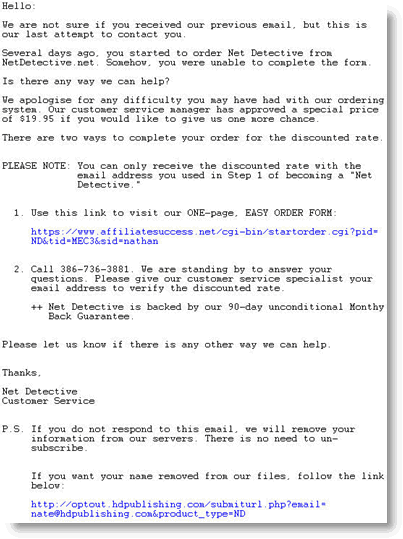
Results:
| Original Emails | 7.10% |
|---|---|
| Incentivized Email | 43.45% |
| Difference | 512% |
What you need to understand: By offering a discount we increased conversion by 512%, nearly doubling the net revenue of the other two emails combined.
So incentives can be a powerful tool for boosting sales volume, whether on web pages or in email offers. But should every offer I make include an incentive? Is there a reliable way to know when an incentive is needed, and if so, where in the sales process should it be presented?
In a moment we will look deeply at the factors that influence the true efficacy of an incentive, not simply in eliciting the desired action, but in yielding the greatest economic value. First, though, let’s consider the role of incentives in the total sales conversion process.
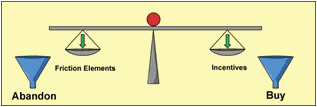
If we look at the MarketingExperiments Conversion Index, we see that incentive and friction are “fused” to each other by a single coefficient, and and that they have opposing effects on conversion probability.
Conversion Index:

Wherein:
“i” = Incentive to take action.
“f” = Friction elements of process.
As we established in a prior brief focused specifically on the topic, Friction is present in every sales process and cannot be completely eliminated without “eliminating the sale.” Friction should, though, be minimized by taking steps to reduce both Length-Oriented and Difficulty-Oriented sources of customer aggravation.
Once the sources of Friction in the sales process have been minimized, then the objective of Incentive is to “tip the balance” of emotional forces from negative (exerted by Friction elements) to positive.
In our experience, we have found that often, businesses will try one incentive offer and then quit if it does not yield extraordinary returns. Incentives, though, must be tested. There are myriad possible incentives that one might think of for virtually any product or market. However, for each, there is one that is best. This offer we will call the “ideal incentive.”
Now if we say that some incentives are better than others, then we must have a way to measure incentive quality. In preparation for doing that, let’s first look at a few examples of types of incentive offers.
Examples
- Free White Paper or E-Book
- Product Discount
- Complimentary Product or Accessory
- Gift
- Free Shipping
Most Internet marketers and businesspeople are already familiar with incentives such as free white papers or E-books on a topic relevant to the target market, free gifts, accessories or related products and, of course, with product discounts and with free shipping—two of the most powerful, and most misunderstood, keys in online marketing.
Case Study 3:
Test Design
We conducted a 37-day experiment for one of the world’s largest online news services. Our objective was to increase the number of subscriptions for their financial newsletter.
Here are the Offer Pages, both of which provide a related incentive for signing up for a free trial:
The one below offered a free book on investing that was on New York Times best-selling list.

The other offered a free 12-page investment kit created by the company itself.
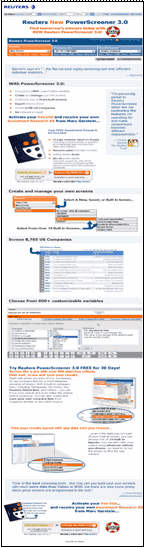
Both incentives were placed directly next to the calls to action and email captures. Here is what we found:
| Book | 1.28% |
|---|---|
| Kit | .71% |
| Difference | 80% |
What you need to understand: The free book resulted in an 80% higher conversion rate than the investment kit.
The free book yielded an 80% higher rate of free trial signup than did the investment kit. So, can we conclude with total confidence that the book is the better incentive? Put another way, if we measure the value of an incentive by its impact on the bottom line, then can we determine the best one using conversion rate alone?
Consider this: If we offered the incentive of a free sports car with every paid magazine subscription, what do you suppose the conversion rate would be?
So if it’s not conversion rate, then what is the best measure? Finding the ideal incentive involves determining which one will yield the greatest positive impact on net profit. MarketingExperiments makes this assessment using a variation of Return on Investment (ROI) that we refer to as Return on Incentive (ROIc). As with ROI, your objective is to maximize ROIc, and hence the best incentive is that for which ROIc is the greatest.

ROIc Example 1:
Applying ROIc to Case Study 3:
To explore the concept of Return on Incentive, we used the actual conversion rates from the previous case study.
Assume that the offer without incentives converts at 0.67%.
Now let’s calculate the ROIc of the free book.
| Incentive | Traffic | Conv. to Free Trial |
Trial Sign-ups | Conv. to Free Paid |
Paid Subs. |
|---|---|---|---|---|---|
| None | 100,000 | 0.67% | 670 | 75% | 503 |
| Book | 100,000 | 1.28% | 1,280 | 75% | 960 |
| Difference | 457 | ||||
What you need to understand: The incentive nearly doubled the conversion for both free trials and paid subscriptions.
Assumptions:
- Net delivered cost for the book is $17.50 for wholesale cost plus shipping.
- The incentive generated a sales increase of 457 additional units per month, rising from 670 to 1,280.
Return is net profit less net cost: ROIc = (P$n – C$n)
ROIc = (profit impact X additional units] – (Delivered cost X all units)
ROIc = ($37.50 X 457) – ($17.50 X 1,280)
ROIc = -$5,262
Using the same methodology, let’s calculate the ROIc of the free investment kit.
| Incentive | Traffic | Conv. to Free Trial |
Trial Sign-ups | Conv. to Free Paid |
Paid Subs. |
|---|---|---|---|---|---|
| None | 100,000 | 0.67% | 670 | 75% | 503 |
| Book | 100,000 | 0.71% | 710 | 75% | 533 |
| None | 30 | ||||
Free kit (0.71%)
Assumptions:
- Net delivered cost for the kit is $1.40 for wholesale cost + shipping.
- Incentive generates sales increase of 30 additional units per month, rising from 670 to 710.
ROIc = (P$n – C$n)
ROIc = (profit impact X additional units) – (Delivered cost X all units)
ROIc = ($37.50 X 30) – ($1.40 X 710)
ROIc = $131
Comparing return on incentive:
If we factor in only the conversion rate for the two incentives, the free book incentive yielded a 1,423% higher Net Revenue Impact than the investment kit.
| Incentive | Impact on Paid Subs |
Profit ($/unit) |
Net Revenue Impact |
|---|---|---|---|
| Book | 457 | $37.50 | $17,137.50 |
| Kit | 30 | $37.50 | $1,125.00 |
| $ Difference | $16,013.00 | ||
| % Difference | 1,423% | ||
But, we must factor in:
- Incentive cost
- Delivery cost
| Incentive | Trial Sign-Ups | Cost to Deliver ($/unit) |
Cost to Deliver (Period) |
Net Revenue Impact |
ROIc |
|---|---|---|---|---|---|
| Book | 1,280 | $17.50 | $22,400 | $17,137.50 | $-5,262.50 |
| Kit | 710 | $1.40 | $994 | $1,125.00 | $131.00 |
| $ Difference | $5,393.50 | ||||
Results:
| Incentive | ROIc |
|---|---|
| Book Incentive | $-5,262.50 |
| Kit Incentive | $131.00 |
| $ Difference | $5,393.50 |
What you need to understand: Although the free book converted 80% higher than the investment kit, the high delivered cost caused it to be unprofitable in the short term.
Note that the short term or “immediate” ROIc for the book incentive is negative. By including the lifetime value of a customer, the long-term ROIc may be positive, but between the two, the kit is the better incentive.
So, through testing and applying ROIc methodology, we found that the incentive with the highest conversion rate does not always yield the highest net profit. And we have a way to determine which of a set of incentive offers that we have tested is truly the best.
Key point: Highest Conversion Rate ≠ Best incentive
But it is impractical to test every conceivable incentive that you might offer. So the question arises: Is there a way to systematically evaluate prospective incentive offers and consistently identify those with the greatest potential for being the Ideal Incentive?
Through the evaluation of hundreds of tests and incentive offers, MarketingExperiments has discovered a conceptual and mathematical model for evaluating prospective incentive offers and found it to be highly predictive of ultimate efficacy based upon the criterion of ROIc. This comparative metric is called “Perceived Value Differential” or “PVD.”
Perceived Value Differential (PVD)
PVD is the difference between the perceived value of an incentive, as experienced by the customer, and the net cost to deliver the incentive.
Example:
An incentive that costs $10 per unit but has a perceived value of $49 is better than one costing $15 but perceived as $30.
Incentive 1 – $49 – $10 = $39 Better (Higher) PVD
Incentive 2 – $30 – $15 = $15
Determining the ideal incentive
Coffee
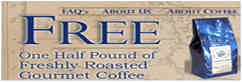
Est. Perceived value (Vp): $8
Net Delivered cost (C$n): $2
PVD = Vp – C$n
PVD = $8 – $2
PVD = $6

Thermos
Est. Perceived value (Vp): $15
Net Delivered cost (C$n): $3
PVD = $12
Presuming that the two incentives are equally desirable to target prospects, then you will choose the offer with the higher PVD. Therefore, in this case you would select the thermos ($23 PVD), over the coffee ($6 PVD) for experimental testing, since it is expected to ultimately produce the greater ROIc.
Intently focused on the bottom line, revenue or conversion, we often ask our customers to take actions for which they have no reasonable incentive.
Here are 5 fundamental principles when using incentives:
- Determine the “ideal” incentive through repeated testing.
- Place incentives as close as possible to sources of Friction on your page.
- Use Return on Incentive (ROIc) rather than conversion rate to measure the success of your incentive offers.
- Consider both short and long term ROIc in evaluating whether an incentive is profitable.
- Use Perceived Value Differential (PVD) to select the most promising incentives for testing.
Related MarketingExperiments Reports:
- Transparent Marketing Tested
- Landing Page Optimization Tested
- Landing Page Confusion
- Landing Page Optimization Tested: How to Create “Sticky Landing Pages”
- Testing the Power of Urgency on Landing Pages
As part of our research, we have prepared a review of the best Internet resources on this topic.
Rating System
These sites were rated for usefulness and clarity, but alas, the rating is purely subjective.
* = Decent | ** = Good | *** = Excellent | **** = Indispensable
Credits:
Editor(s) — Frank Green
Bob Kemper
Writer(s) — Adam Lapp
Frank Green
Bob Kemper
Contributor(s) — Flint McGlaughlin
HTML Designer — Cliff Rainer